
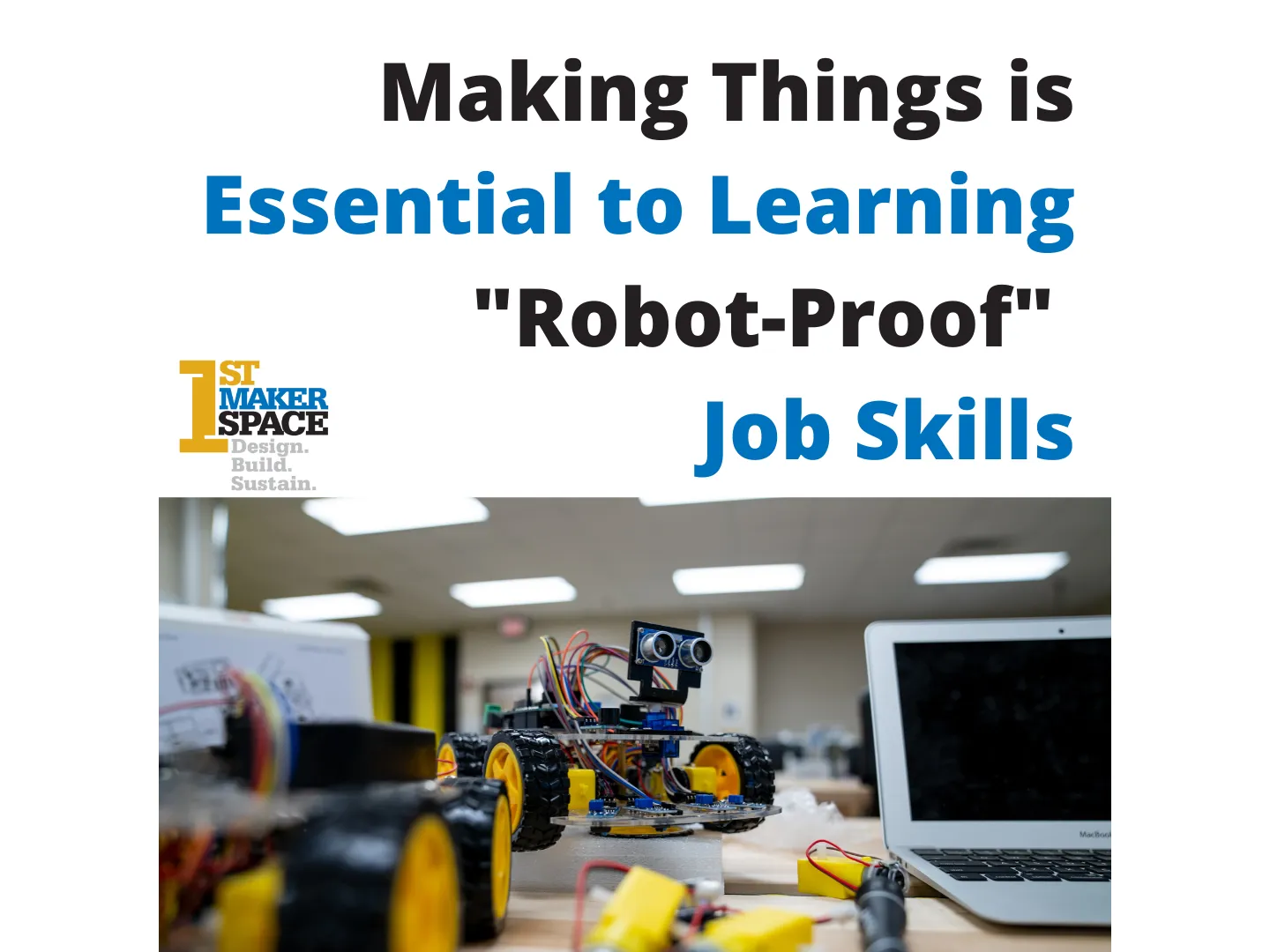
All too often, students believe that attentively listening to a lecture in class, doing homework, and passing an exam is sufficient evidence that they know the subject matter. That may be true with subjects that emphasize memorizing/recalling material, but the jobs of the future won’t be like that. Robots can memorize rules and apply algorithms faster and more reliably that humans. To really succeed in the workforce of the future you need robot-proof skills like creativity, problem solving, critical thinking, collaboration, and communication.
Today, technology is producing machines that utilize Artificial Intelligence and Machine Learning. Truly, these are wonders of our modern age. But, many human jobs are at risk of being replaced by these machines that, from the outside, appear to be able to ‘think.’
The human brain has talents that machines can’t match. Those talents aren’t based on memorizing facts – they are the combination of insight, intuition, experience and creativity. Students who have been trained to solve problems, persist past frustration to achieve goals, embrace flexibility, imagine a world that ‘can be’ rather than simply ‘what is’ will ALWAYS outperform machines. Those students will always be high value/high performance members of teams and secure a place for themselves in the economy of the future.
The question is: How do students acquire these ‘robot proof’ skills? Our answer is simple: make things!
It will come as no surprise to educators that student engagement with traditional pedagogy is low. We are not ‘turning on’ the vast potential of the brains of students with dry lectures and stale lessons plans. Humans have evolved to learn best when their hands are involved. Why not use the power of our hands to activate real learning during school?!
Making something combines the head and the hands to solve problems. The solutions to many problems are innovations that cannot be scripted or anticipated. The real world provides uncompromising feedback when it comes to making things. A maker mindset engages students to collaborate, articulate, imaginate and create solutions that can’t be programmed into a machine . . . and which have the biggest impact on student attainment.
Making at this level is not just tinkering – it’s thinkering! Every employer in high demand/high wage career areas desire workers who can think on their feet and work with their hands.
Who will fix the robots? Setup and maintain the complex machinery and processes that dominate the modern world? Design, develop and construct the economy of the future?
Makers! That’s who!
At 1st Maker Space, we’re on a mission to empower children to learn through doing. We believe that by providing makerspaces and engaging hands-on curriculum, we’re helping students discover a passion for learning that lasts a lifetime.
Our friendly and knowledgeable sales team is eager and ready to help you get started with a makerspace. Let’s discuss how we can support your organization in reaching its goals! From providing equipment and supplies to helping you develop a comprehensive makerspace strategy, we have the experience and expertise necessary to make it happen.


Join our community of educators and leaders building active Maker communities nationwide today!
Gain Exclusive Access to:
Gain Exclusive Access to:
Bri Wagner brings a bachelor’s degree in Elementary Education and nine years of classroom teaching experience to her role at 1st Maker Space. A former Teacher of the Year Award recipient, Bri is passionate about creating engaging, hands-on learning experiences that inspire student success. She understands the impact that innovative instruction and meaningful classroom resources can have on student achievement and is dedicated to partnering with educators to bring high-quality STEM solutions into classrooms. Bri is committed to empowering teachers and helping students develop the creativity, confidence, and problem-solving skills they need to thrive.