Education continues to advance as teachers prepare students for a rapidly changing future. Comparing STEM vs STEAM’s educational activities captures significant attention from educators and parents alike. Both learning styles equip all grade levels with practical skills through interactive, hands-on experiences, though they take different paths to achieve this goal.
Classroom walls once separated subjects into neat boxes – now they’ve come down. These blended learning concepts share similar goals but diverge in one major way:
STEM education companies put actual tools in students’ hands. Kids work with 3D printers, robotics kits, and engineering supplies. Textbook theories become physical objects students build and test:
Unlock your child’s full potential through innovative STEAM learning pathways designed to inspire curiosity and build tomorrow’s problem-solving skills.
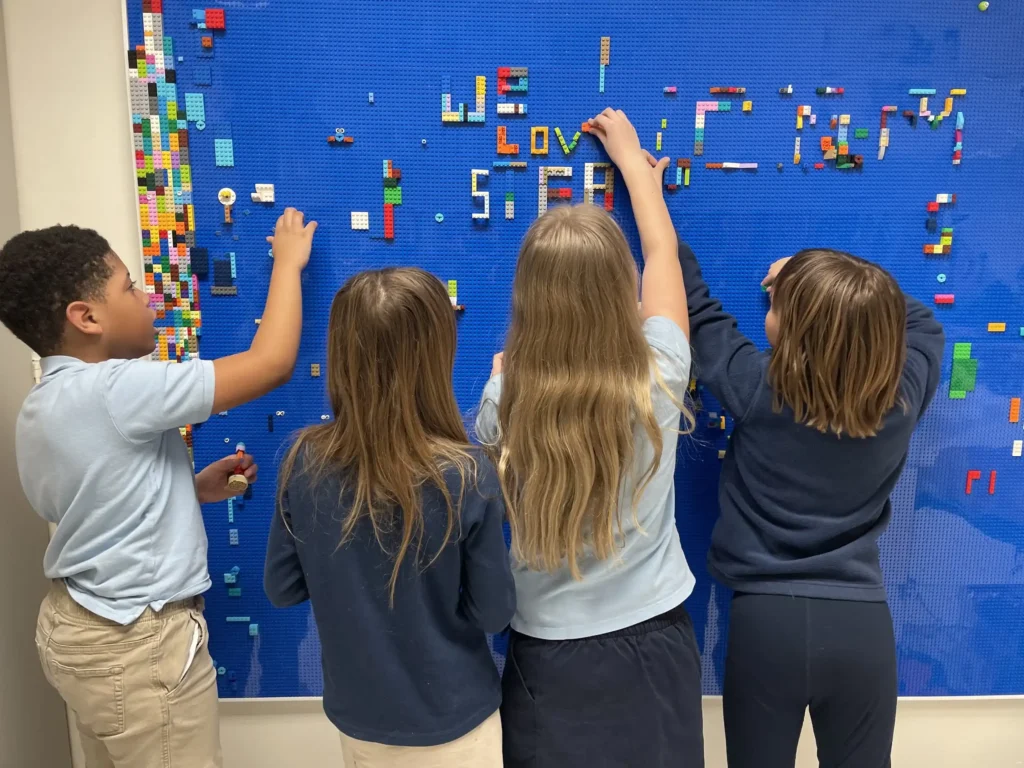
STEAM adds Art to Science, Technology, Engineering, and Mathematics. Students build, design, and solve problems across subjects. Projects include:
Empower your students with practical learning opportunities by starting a makerspace that redefines classroom concepts into hands-on discoveries and collaborative achievements.
STEM education began during America’s push for technological leadership, gaining widespread recognition in the early 2000s amid growing economic competition in global markets. STEAM developed later when educators observed that excluding arts potentially limited innovation potential. Historical figures like Leonardo da Vinci demonstrated how scientific knowledge combined with artistic vision produces revolutionary breakthroughs.
Daily classroom activities highlight the main differences between these educational philosophies. Here’s how these distinct learning systems operate side-by-side:
Problem-solving follows a structured format in technical classrooms. Kids work through design steps, scientific methods, and mathematical reasoning. The rooms come equipped with 3D printers, robotics kits, and programming tools.
Adding arts brings new materials to this technical foundation. Students build musical instruments using engineering principles, create artwork using mathematical concepts, or produce digital media with technology. This mix helps develop creativity and communication alongside technical skills.
The “A” in STEAM deepens student learning experiences by developing:
Visual arts integration makes technical concepts more approachable for diverse learners by offering multiple pathways to understanding. For students who might not immediately connect with traditional STEM company projects or subjects subjects, artistic components can spark interest in technical fields.
Educational models influence not just what students learn but also their future opportunities and outlook. Both STEM and STEAM prepare students for tomorrow’s challenges:
Many colleges actively seek students with strong foundations in STEM subjects. Students who pursue a stem program often have advantages when applying to related majors. Liberal arts colleges also value students who bridge technical and humanities disciplines.
STEAM students develop portfolios demonstrating both technical knowledge and creative application. This multidimensional preparation appeals to varied educational settings, from engineering departments to interdisciplinary programs that attract international students seeking well-rounded education.
Students thrive when STEAM and STEM educational companies match their natural learning preferences and address their individual strengths:
STEM education creates powerful learning opportunities through focused technical development:
When students engage with well-designed STEM activities, they develop practical skills that translate directly to academic success and future careers.
The advantages of STEAM education incorporate artistic elements into hands-on learning:
Educational experience shows that well-designed learning spaces with appropriate tools and trained educators make both applications successful in reaching more students.
Both educational frameworks connect directly to workplace readiness, though they prepare students for somewhat different professional trajectories. STEM programs align closely with growing demand in fields like systems engineering, project engineering, and civil engineering. According to BLS reports, these technical positions offer substantial earning potential.
STEAM education prepares students for these same technical roles while developing capabilities valued in design, communication, and creative industries. This broader preparation provides flexibility in career path options, allowing students to pursue opportunities that blend technical expertise with creative thinking.
At 1st Maker Space, we are a STEAM and STEM education company, creating learning environments through custom-designed spaces supporting both methodology. Our team creates dynamic makerspaces equipped with tools, curriculum, and teacher training needed for successful hands-on learning programs. We build spaces where students engage with real-world challenges, develop technical skills, and unleash their creativity.
Whether enhancing STEM education or exploring STEAM curriculum integration, our solutions engage students while meeting educational standards. Contact us today to discover how a makerspace can transform learning in your school.
Neither STEM or STEAM is inherently better, as both offer valuable pathways to student engagement and success. The choice between STEM and STEAM depends on educational goals. STEM provides focused technical development, while STEAM offers a more integrated format that includes creative expression alongside technical skills.
The change from STEM to STEAM responded to educators recognizing that artistic thinking enhances innovation and problem-solving abilities. This expansion acknowledges that tomorrow’s challenges require not only technical expertise but also creative thinking, communication skills, and design sensibility that visual arts integration naturally develops.
A STEM-based learning project might involve students programming a robot to navigate an obstacle course using coding principles and mathematical calculations. In a STEAM approach, students might still program the robot but also design its appearance, create a narrative around its purpose, and consider how its movements could express emotions—integrating technical functionality with artistic elements that enhance engagement and learning.